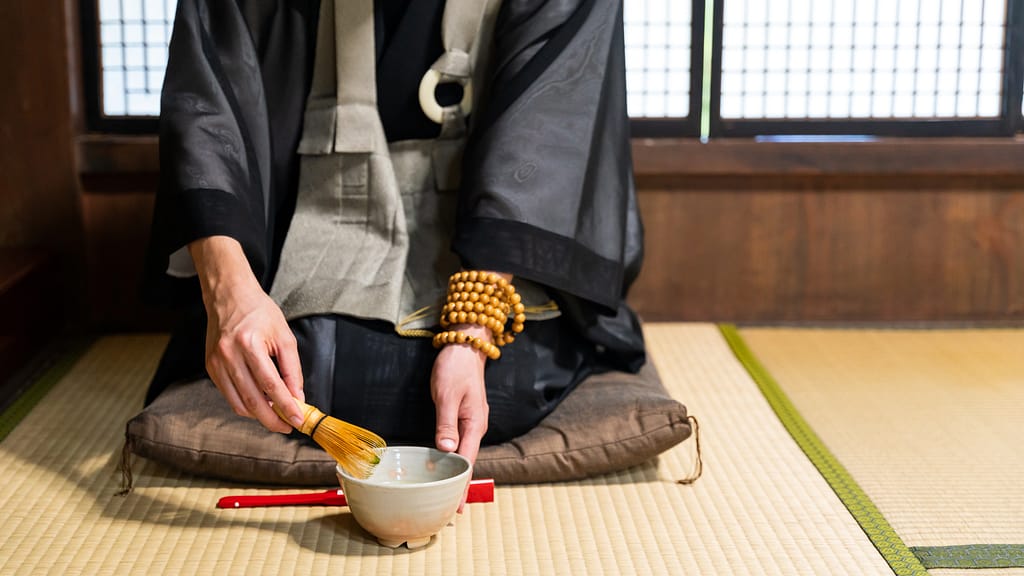
The spiritual state, “subtle taste” (wabi) was comprehensively pursued by Sen no Rikyū (1522-1591) who sublimely perfected the art of the Japanese Tea Ceremony in Azuchi-Momoyama Period.”
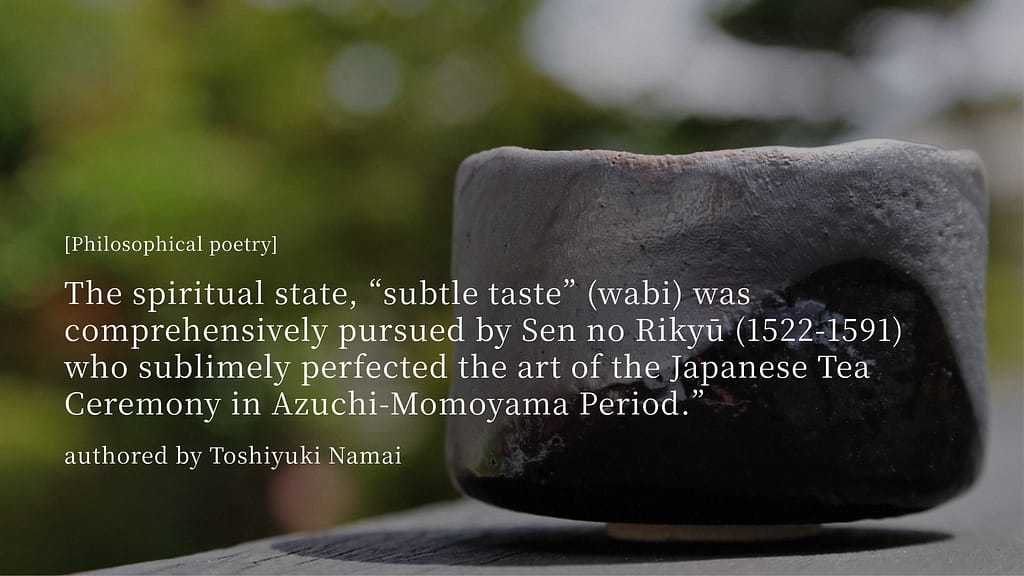
The spiritual state, “subtle taste” (wabi) was comprehensively pursued by Sen no Rikyū (1522-1591) who sublimely perfected the art of the Japanese Tea Ceremony in Azuchi-Momoyama Period.
     Toshiyuki Namai entirely guides you to delicately feel and understand two aesthetic concepts of Japanese culture, “subtle taste” and “elegant simplicity.”
    I shall solemnly lecture upon two abstract aesthetic concepts of Japanese traditional culture. Those concepts I introduce are the two, “subtle taste” (wabi) and “elegant simplicity (sabi).”
    Subtle taste is a concept in order to inwardly express a way of silent and calm spiritual state in Japanese culture. This spiritual state was comprehensively pursued by Sen no Rikyū (1522-1591) who sublimely perfected the art of the Japanese Tea Ceremony in Azuchi-Momoyama Period which is currently appreciated and treated as one of the great aesthetic values in Japan.
    Historically speaking, tea master and Buddhist monk, Murata Shukō (1423-1502) initiated Wabicha (the tea of refined simplicity) in Muromachi Period. Then, tea master, Takeno Jōō (1502-1555) inherited the spirit of Wabicha from Murata Shukō and organized the basis (basic framework) of Wabicha.
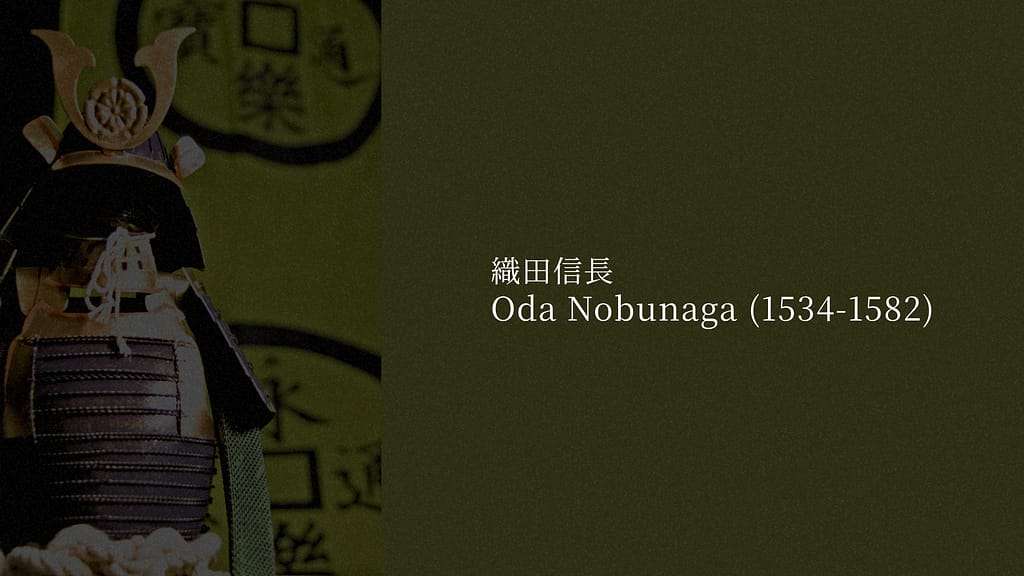
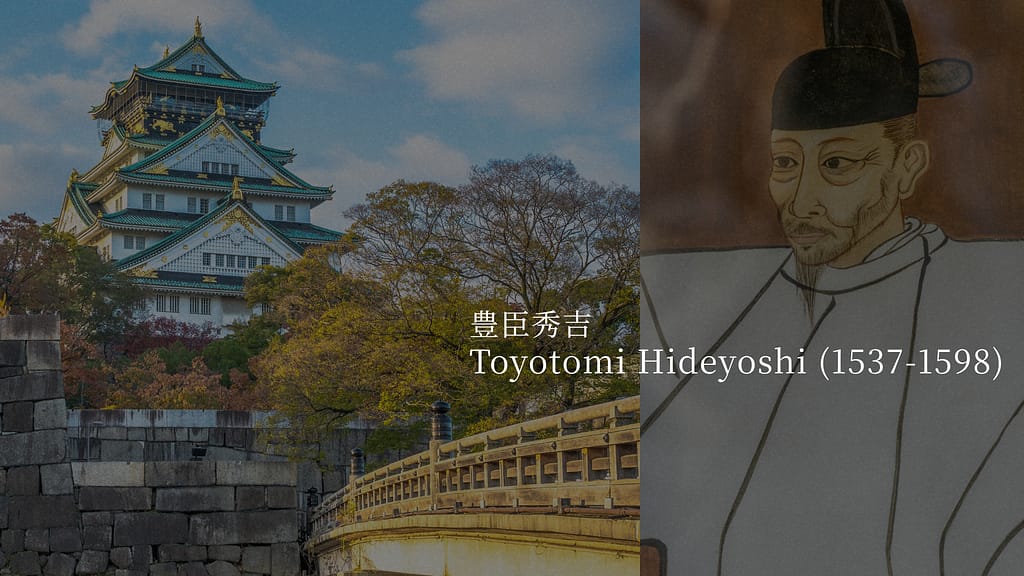
     Sen no Rikyū austerely and keenly practiced the basis of Wabicha and beautifully perfected it as the art of the Japanese Tea Ceremony. He was a tea master to two powerful warriors, Oda Nobunaga (1534-1582) and Toyotomi Hideyoshi (1537-1598) who valued the aesthetics of Wabicha very much.